Audio-Video Enhancement &
Conversion for Law
Enforcement, Attorneys,
Lawyers, and Legal System
Audio and video enhancement and conversion is often needed for the legal community, law enforcement, as well as lawyers and attorneys defending or prosecuting cases. Standards are not universal and quality is often poor for belt tape and video, safe-house interviews, law enforcement interrogation rooms, depositions, and other sources. Sometimes evidence is recalled from old files that are not standard today. In these cases conversion of audio and video formats may be needed. Quality of the audio may need to be enhanced to allow for better transcripts or convincing audio evidence presented at trial or for a judge. Even some well-recorded courtroom proceedings may need enhancement. Technivise has the skills, equipment, and experience to help.


Interested in more information about legal and law enforcement audio conversion and enhancement? Topics below may be of help. If
you don’t find what you need, give us a call or send an email.
How can Legal audio be enhanced? (Includes audio on videos)
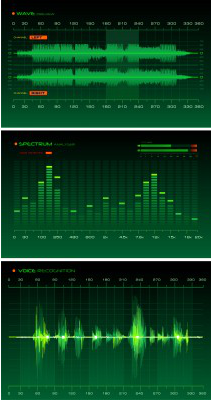
• Legal or law enforcement audio can be amplified Many times belt audio/video and safe-house and interrogation recordings are simply too faint to hear well. Local amplification may work; however, noise in the recording may actually damage the audio if amplified too much. Technivise quickly reviews the audio to ensure the best amplification possible without loss of clarity or introduction of distortion. • Legal or law enforcement audio can be selectively-amplified Quite often particular speakers are louder than others. If the audio is bulk- amplified, then the louder speakers are distorted. Selective amplification can maintain audio quality without adding distortion. This can take more time than bulk-amplification. There are ways to prevent this type of audio with better recording equipment or by placing the recording device nearest the most important speaker. Contact Technivise for advice. • Some legal or law enforcement audio file distortions can be removed Recording equipment sometimes distorts audio. This is often seen in older recording equipment often found in safe-house interview rooms, interrogation rooms, etc. • Many background noise can be reduced or removed from legal, law enforcement audio Interrigation rooms, safe-house recordings, and under-cover recordings are notorious for low rumbling noises and high pitched noises can be reduced or eliminated. Constant noise from a machine or fan can often be significantly reduced. Brief noises like clicks and pops can be removed. These types of noises can make it hard to hear a conversation. They can also cause extreme fatigue in the transcriptionist that must listen to and transcribe long audio files resulting in higher costs for transcription and errors and “inaudible” sections of the transcript. • Stereo (Left and Right) audio channels can be separated or combined At times the left and right channels of an audio file are better combined for ease of transcription or listening. Other times when audio quality is poor, this process can actually further distort audio. Separating audio channels may be useful to create more clear audio • Audio file format can be changed and improved Sometimes the cause of poor audio is not the recorded audio itself, but that the digital file format is incompatible with equipment that is being used to enhance the audio or play the audio. See file conversion information below. • Combination of the above Using a combination of the above techniques can further enhance some audio.What legal and law enforcement audio is difficult to enhance?
Not all audio can be improved completely. Sometimes audio cannot be improved at all. Sometimes the distortions are of a type that causes information to be lost in the audio and no means of recovery is possible. Contact Technivise about the condition of your audio. • Speakers talking over one another It is very unlikely that speakers talking over one another can be significantly enhanced by technical means. This is why control of the recording environment is critical if accurate transcripts are needed. The best solution in such cases is to allow the transcriptionist to take more time on the audio since the human mind can better untangle such audio conversations. • Extremely muffled voices Voices that are extremely muffled or distorted in some way are usually difficult to recover. Background sounds can be eliminated, audio can be amplified, but the muffled/distorted voice remains a muffled/distorted voice. In some rare cases, sophisticated techniques can reverse some types of distortion. • Eliminating background voices and music It is difficult to remove background voices and music that is in the same frequency range as the target audio you want to enhance. Background that is too similar to the target audio of interest is difficult or impossible to remove.Audio-Video Conversion
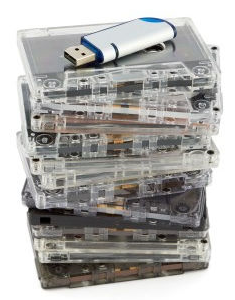
Technivise has extensive experience in multiple video and audio tape and file format conversion, particularly for lawyers, law enforcement, district attorneys, and investigators. This experience allows us to handle a much broader set of audio and video conversion needs for businesses, journalists, and other clients. Technivise specializes in the conversion to audio and between audio formats. We convert between video file formats in simple cases. What type of conversions can we provide? • Video file conversion to audio • Audio tape (multiple formats) conversion to audio • Videotape conversion to audio • Audio file conversion from one format to another • Video file conversion from one format to another • Court reporting and interrogation room audio and video Some File formats: For the Record (FTR) • Backup Player (SSF) • Windows PCM(WAV) • MPEG3 FhG (MP3) • Video formats (AVI, MOV, etc.) • Sony Memory Stick Voice (MSV) • Sony Digital Voice File (DVF) • Sony IC Recorder Sound (ICS) • 8-bit signed raw (SAM) • ACM (WAV) • Apple AIFF, (PCM only) (AIF) • CCITT mu-Law and A-Law (WAV) • Dialogic ADPCM (VOX) • IMA/DVI ADPCM (WAV) • Microsoft ADPCM (WAV) WMV, MP4 • MPEG audio (layers I and II) • Next/Sun CCITT mu-Law, A-Law and PCM (AU) • Olympus (DSS) • Raw PCM Data•Real Audio (RA) • SampleVision format (SMP) • Sound Blaster voice file (VOC) • Sony Digital Voice File (DVF) • TrueSpeech (WAV) • Ogg (OGG) • DiamondWare Digitized (DWD)





Audio-Video Enhancement &
Conversion for Law
Enforcement, Attorneys,
Lawyers, and Legal System
Audio and video enhancement and conversion is often needed for the legal community, law enforcement, as well as lawyers and attorneys defending or prosecuting cases. Standards are not universal and quality is often poor for belt tape and video, safe-house interviews, law enforcement interrogation rooms, depositions, and other sources. Sometimes evidence is recalled from old files that are not standard today. In these cases conversion of audio and video formats may be needed. Quality of the audio may need to be enhanced to allow for better transcripts or convincing audio evidence presented at trial or for a judge. Even some well-recorded courtroom proceedings may need enhancement. Technivise has the skills, equipment, and experience to help.


Interested in more information about legal and law enforcement audio conversion and
enhancement? Topics below may be of help. If you don’t find what you need, give us a call
or send an email.
How can Legal audio be
enhanced? (Includes audio on
videos)
• Legal or law enforcement audio can be amplified Many times belt audio/video and safe-house and interrogation recordings are simply too faint to hear well. Local amplification may work; however, noise in the recording may actually damage the audio if amplified too much. Technivise quickly reviews the audio to ensure the best amplification possible without loss of clarity or introduction of distortion. • Legal or law enforcement audio can be selectively-amplified Quite often particular speakers are louder than others. If the audio is bulk-amplified, then the louder speakers are distorted. Selective amplification can maintain audio quality without adding distortion. This can take more time than bulk-amplification. There are ways to prevent this type of audio with better recording equipment or by placing the recording device nearest the most important speaker. Contact Technivise for advice. • Some legal or law enforcement audio file distortions can be removed Recording equipment sometimes distorts audio. This is often seen in older recording equipment often found in safe-house interview rooms, interrogation rooms, etc. • Many background noise can be reduced or removed from legal, law enforcement audio Interrigation rooms, safe-house recordings, and under- cover recordings are notorious for low rumbling noises and high pitched noises can be reduced or eliminated. Constant noise from a machine or fan can often be significantly reduced. Brief noises like clicks and pops can be removed. These types of noises can make it hard to hear a conversation. They can also cause extreme fatigue in the transcriptionist that must listen to and transcribe long audio files resulting in higher costs for transcription and errors and “inaudible” sections of the transcript. • Stereo (Left and Right) audio channels can be separated or combined At times the left and right channels of an audio file are better combined for ease of transcription or listening. Other times when audio quality is poor, this process can actually further distort audio. Separating audio channels may be useful to create more clear audio • Audio file format can be changed and improved Sometimes the cause of poor audio is not the recorded audio itself, but that the digital file format is incompatible with equipment that is being used to enhance the audio or play the audio. See file conversion information below. • Combination of the above Using a combination of the above techniques can further enhance some audio.What legal and law enforcement audio is difficult to enhance?
Not all audio can be improved completely. Sometimes audio cannot be improved at all. Sometimes the distortions are of a type that causes information to be lost in the audio and no means of recovery is possible. Contact Technivise about the condition of your audio. • Speakers talking over one another It is very unlikely that speakers talking over one another can be significantly enhanced by technical means. This is why control of the recording environment is critical if accurate transcripts are needed. The best solution in such cases is to allow the transcriptionist to take more time on the audio since the human mind can better untangle such audio conversations. • Extremely muffled voices Voices that are extremely muffled or distorted in some way are usually difficult to recover. Background sounds can be eliminated, audio can be amplified, but the muffled/distorted voice remains a muffled/distorted voice. In some rare cases, sophisticated techniques can reverse some types of distortion. • Eliminating background voices and music It is difficult to remove background voices and music that is in the same frequency range as the target audio you want to enhance. Background that is too similar to the target audio of interest is difficult or impossible to remove.Audio-Video Conversion
Technivise has extensive experience in multiple video and audio tape and file format conversion, particularly for lawyers, law enforcement, district attorneys, and investigators. This experience allows us to handle a much broader set of audio and video conversion needs for businesses, journalists, and other clients. Technivise specializes in the conversion to audio and between audio formats. We convert between video file formats in simple cases. What type of conversions can we provide? • Video file conversion to audio • Audio tape (multiple formats) conversion to audio • Videotape conversion to audio • Audio file conversion from one format to another • Video file conversion from one format to another • Court reporting and interrogation room audio and video Some File formats: For the Record (FTR) • Backup Player (SSF) • Windows PCM(WAV) • MPEG3 FhG (MP3) • Video formats (AVI, MOV, etc.) • Sony Memory Stick Voice (MSV) • Sony Digital Voice File (DVF) • Sony IC Recorder Sound (ICS) • 8-bit signed raw (SAM) • ACM (WAV) • Apple AIFF, (PCM only) (AIF) • CCITT mu-Law and A-Law (WAV) • Dialogic ADPCM (VOX) • IMA/DVI ADPCM (WAV) • Microsoft ADPCM (WAV) WMV, MP4 • MPEG audio (layers I and II) • Next/Sun CCITT mu-Law, A-Law and PCM (AU) • Olympus (DSS) • Raw PCM Data•Real Audio (RA) • SampleVision format (SMP) • Sound Blaster voice file (VOC) • Sony Digital Voice File (DVF) • TrueSpeech (WAV) • Ogg (OGG) • DiamondWare Digitized (DWD)



Audio-Video Enhancement &
Conversion for Law
Enforcement, Attorneys,
Lawyers, and Legal System
Audio and video enhancement and conversion is often needed for the legal community, law enforcement, as well as lawyers and attorneys defending or prosecuting cases. Standards are not universal and quality is often poor for belt tape and video, safe-house interviews, law enforcement interrogation rooms, depositions, and other sources. Sometimes evidence is recalled from old files that are not standard today. In these cases conversion of audio and video formats may be needed. Quality of the audio may need to be enhanced to allow for better transcripts or convincing audio evidence presented at trial or for a judge. Even some well-recorded courtroom proceedings may need enhancement. Technivise has the skills, equipment, and experience to help.



Interested in more information about legal and law enforcement
audio conversion and enhancement? Topics below may be of help.
If you don’t find what you need, give us a call or send an email.